Pierre Le Forestier
By a photographer who shoots both
Do you really have to choose between digital and film? There is something strange about film's comeback. At a time when our phones capture, in a fraction of a second, images of a quality that professional studios would have envied twenty years ago, many photographers are deliberately going back to a process born in the 19th century: slow, expensive, and with a result that remains uncertain until you open the lab. This paradox deserves a closer look: not to pick a side, but to understand what film photography and digital say about our relationship with images.
Photo credit: Pierre Le Forestier
The digital revolution didn't just change the tool: it transformed our relationship with time. Where film photographers had to wait, sometimes for weeks, to see the result of their work, digital gives instant feedback. This immediacy matters: it lets you learn faster, fix a bad exposure on the spot and adjust your composition in real time.
The zero marginal cost of each shot is another considerable freedom. You can experiment and fail without financial consequences. For a photographer who is learning, or for reportage where the fleeting moment comes first, this flexibility is irreplaceable: sports, press and wedding photographers know better than anyone that you can't afford to miss the moment.
Add to that the power of post-processing. Lightroom, Capture One, or even the tools built into a smartphone allow corrections once reserved for big labs: white balance, highlight recovery, noise reduction. The RAW file is raw material that photographers shape to their vision with surgical precision: a form of craft, different from the darkroom but just as real.
Finally, digital has opened up photography as never before: today's entry-level camera technically outperforms the professional SLRs of fifteen years ago. Photography has never been so open to everyone.
Photo credit: Sophie Compain
And yet. Many people who grew up with digital are coming back to film: not out of nostalgia, but out of an inner need. What draws them back?
Thirty-six exposures on a roll of 135 film means thirty-six chances, not one more. That scarcity forces you to look before you press. It imposes a discipline of attention that, paradoxically, is freeing: when every shot has a cost, you stop « wasting » images and start choosing. Many film photographers talk about this welcome slowing down and a heightened presence in the scene.
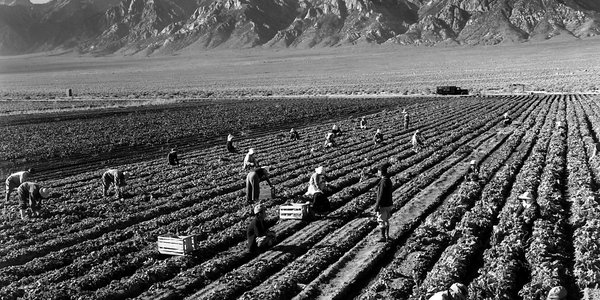
Film grain, that random, organic texture that varies with the film stock, the light and the developer, is fundamentally different from digital noise. It is not a flaw to fix, but a signature. The latitude of a colour negative, the deep blacks of a black and white film, the rich saturation of a Velvia slide: each film has a personality that digital presets and filters can only imitate, without ever quite matching it.
Photo credit: Arnaud Elissalde
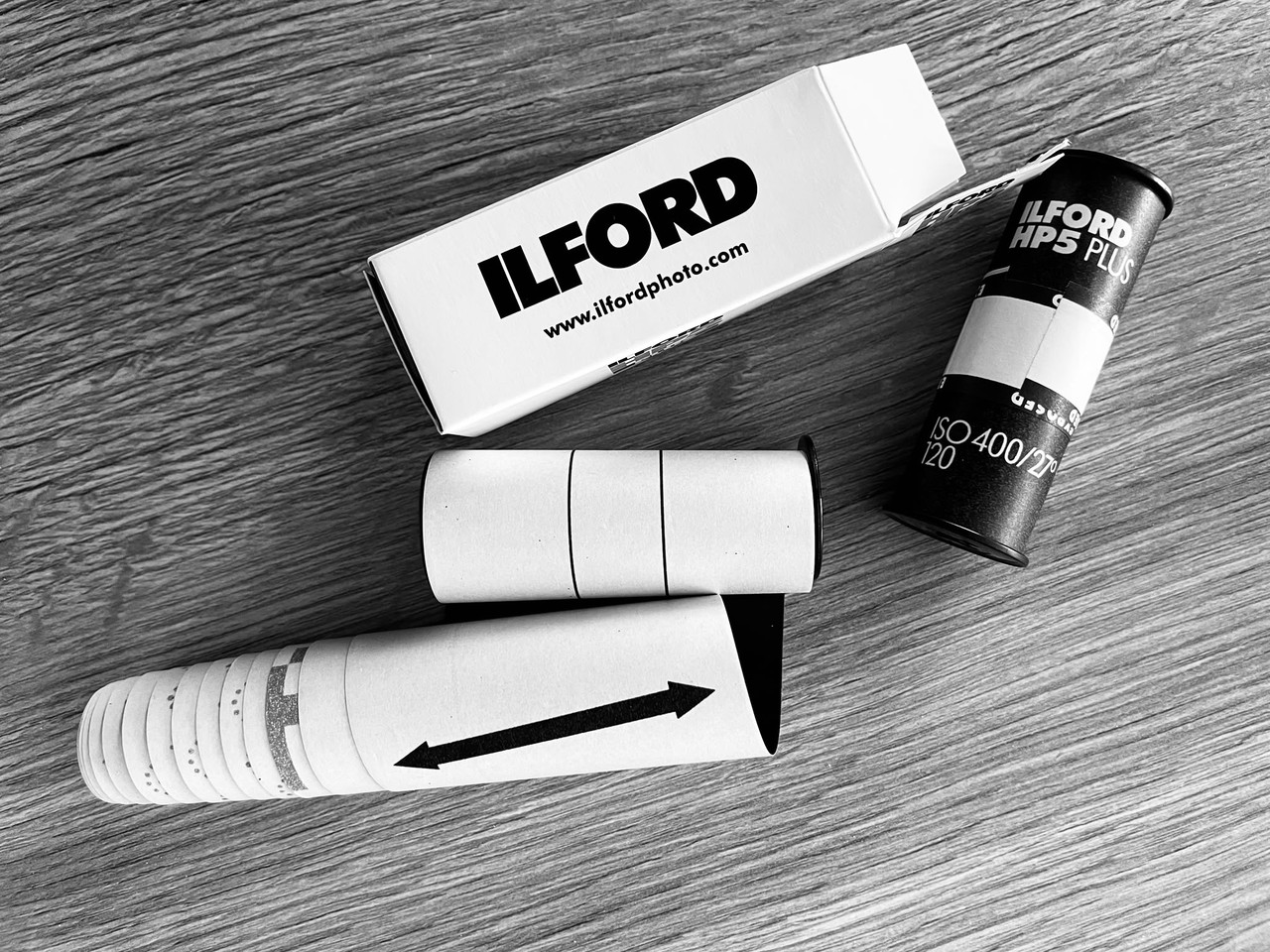
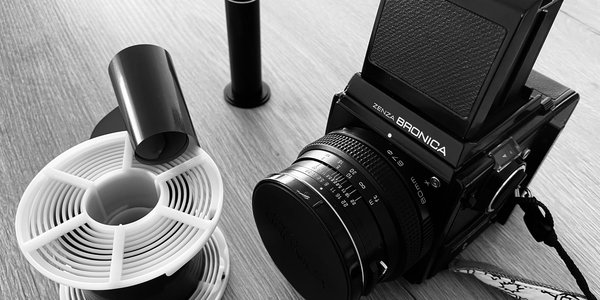
There is a sensory, ritual dimension that digital cannot reproduce: loading film in the dark, winding on after each shot, the smell of developer, the image slowly appearing in the developing bath. All these gestures anchor the photographer in a process and make them part of a whole chain rather than just someone capturing moments. Some see it as wasted time; others as a form of meditation.
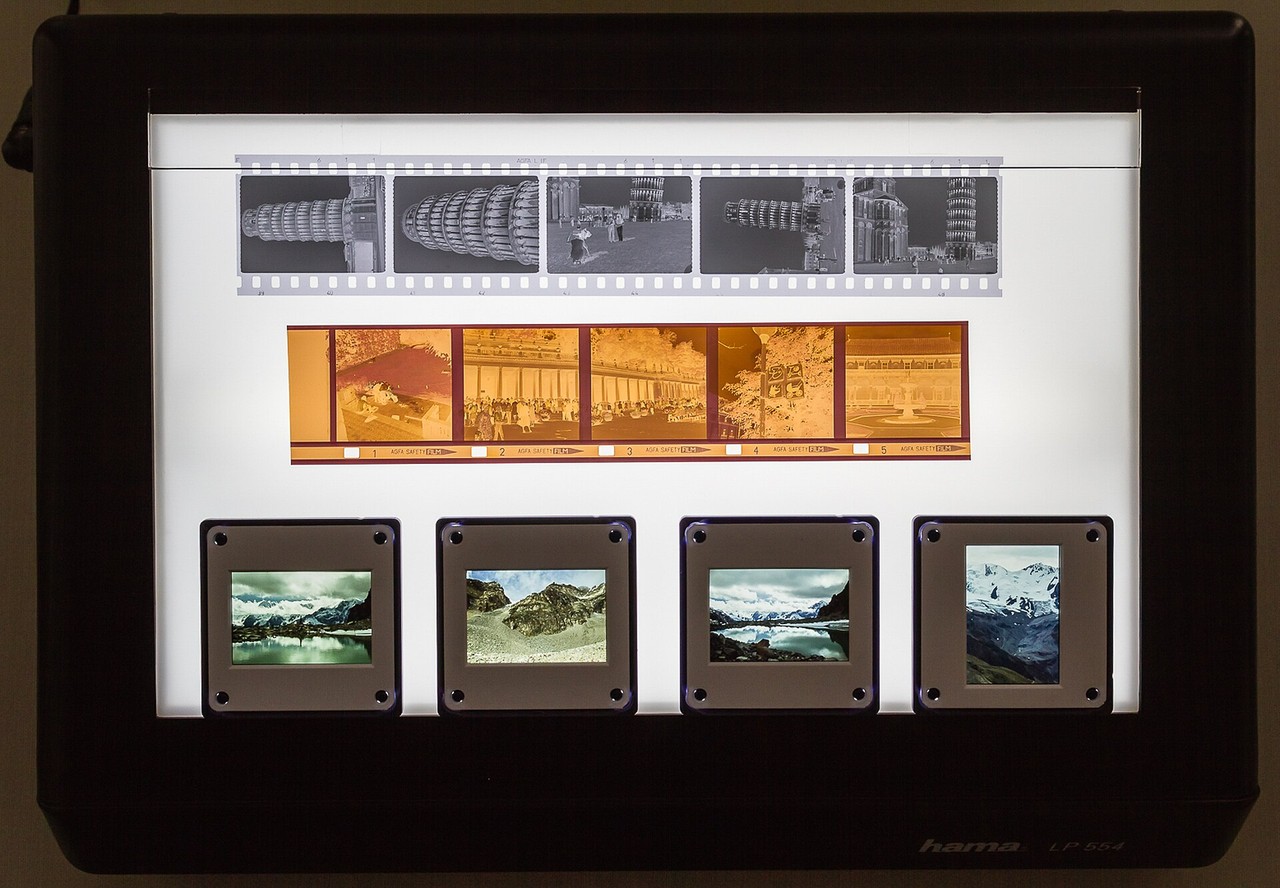
Photo credit: Friedrich Haag, CC BY-SA 4.0, via Wikimedia Commons
Negatives are physical archives. They exist independently of any computer system or file format that might become obsolete. A box of negatives found in an attic in fifty years' time will still be readable. Can the same be said of a hard drive from 2010?
Even before choosing between digital and film, there is a more fundamental decision: the format. The light-sensitive surface, sensor or film, largely determines image quality, depth of field, the weight of the camera and the very nature of the photographic experience.
What this hierarchy shows is that the digital vs film question is inseparable from the question of format. A digital full frame and a 135 film share the same surface, but not the same philosophy. A 6 × 6 medium format film rivals or beats digital full frame in raw resolution, but imposes a radically different pace. And a 4 × 5 large format has no accessible digital equivalent. Choosing a format means choosing a relationship with the world as much as a look: 135 invites you to move, medium format asks you to stop, large format demands that you contemplate.
It would be a mistake to treat these two approaches as opposing camps. They are two tools, two philosophies, and most serious photographers end up using both, knowingly. Digital excels for documentation, reportage, commercial photography, fast learning, anything that requires speed and volume. Film comes into its own when you want to slow down, when a project calls for a particular look, when the practice itself matters as much as the result.
It is telling that the return of film coincides with the spread of smartphones. When everyone photographs all the time, some feel the need for a more committed, more intentional practice that gives value back to the act of photographing. Film is not a technological step backwards: it is a cultural response to image overload.
© Photo credit: Argia Collective
There is no universal answer, because it depends on what you are looking for. Speed and efficiency? Digital. Character and commitment to a process? Film. Both, depending on the day and the project? As the song suggests, the best of all is to love both sides.
What is certain is that film is not dead. It has simply found a new reason to exist: not as a less efficient alternative to digital, but as a practice in its own right, with its own virtues and philosophy. And no sensor can make that obsolete.
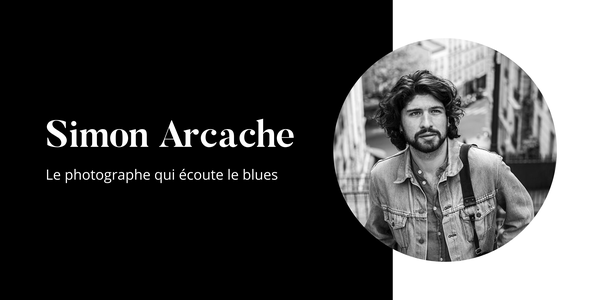
We keep this dual culture, sensor and film, alive within the collective. Discover the film work of Simon Arcache at Crossed Perspectives #1, Sound and Vision (31 July - 2 August, Hendaye, free entry), and our companion article on the Zone System and mastering exposure.
Exhibitions, events, calls for projects and blog articles: get the key news from the Argia Collective straight to your inbox.
Grain, chemistry, light: dive deeper into film photography.
Cookies
We and selected third parties use cookies or similar technologies for technical purposes and, with your consent, for experience, measurement and marketing.