Arnaud Elissalde
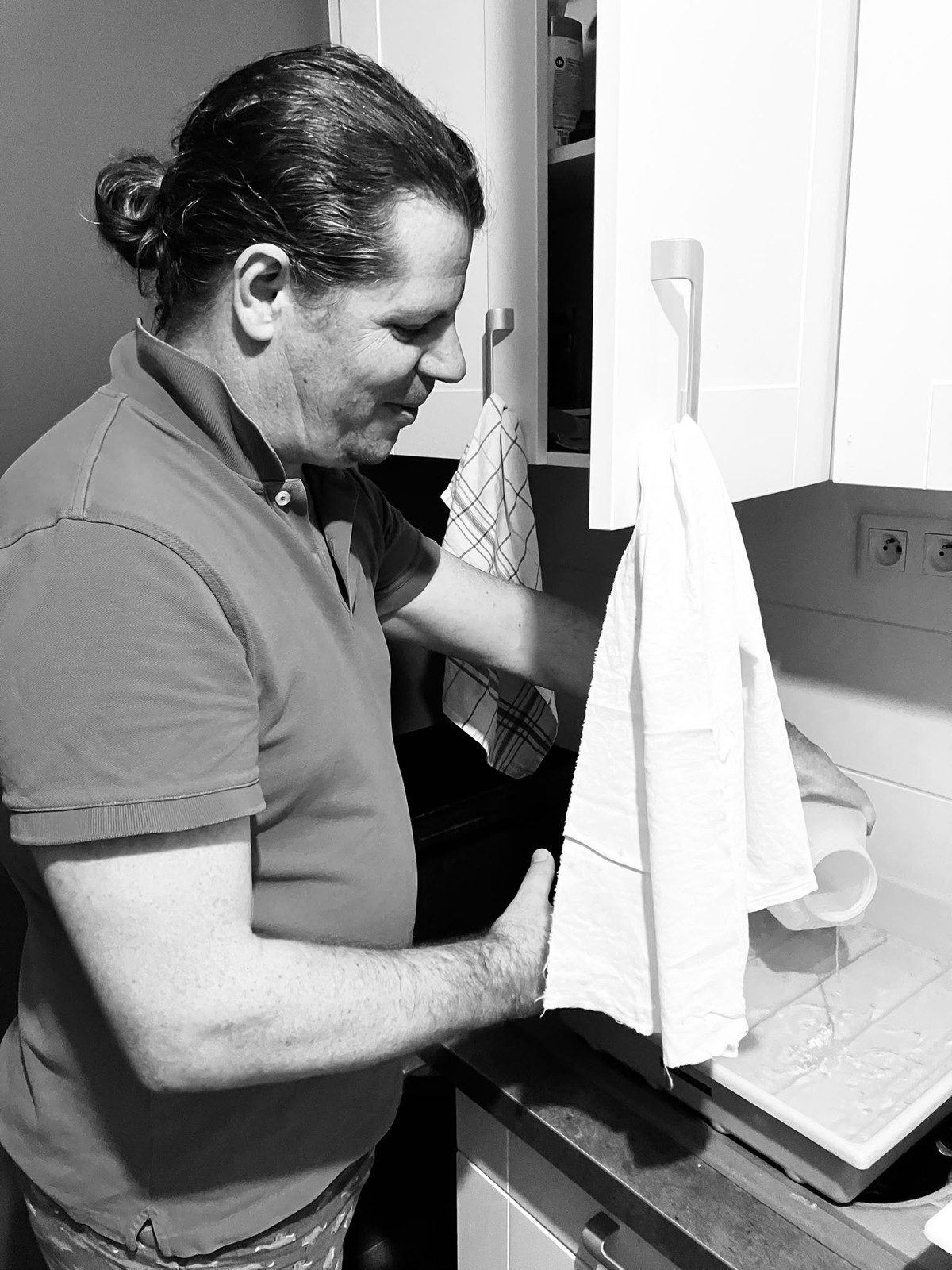
The first thing I notice when I walk into the lab is the smell.
A chemical smell, a little acrid, hard to pin down, but one that seems to take you somewhere else straight away.
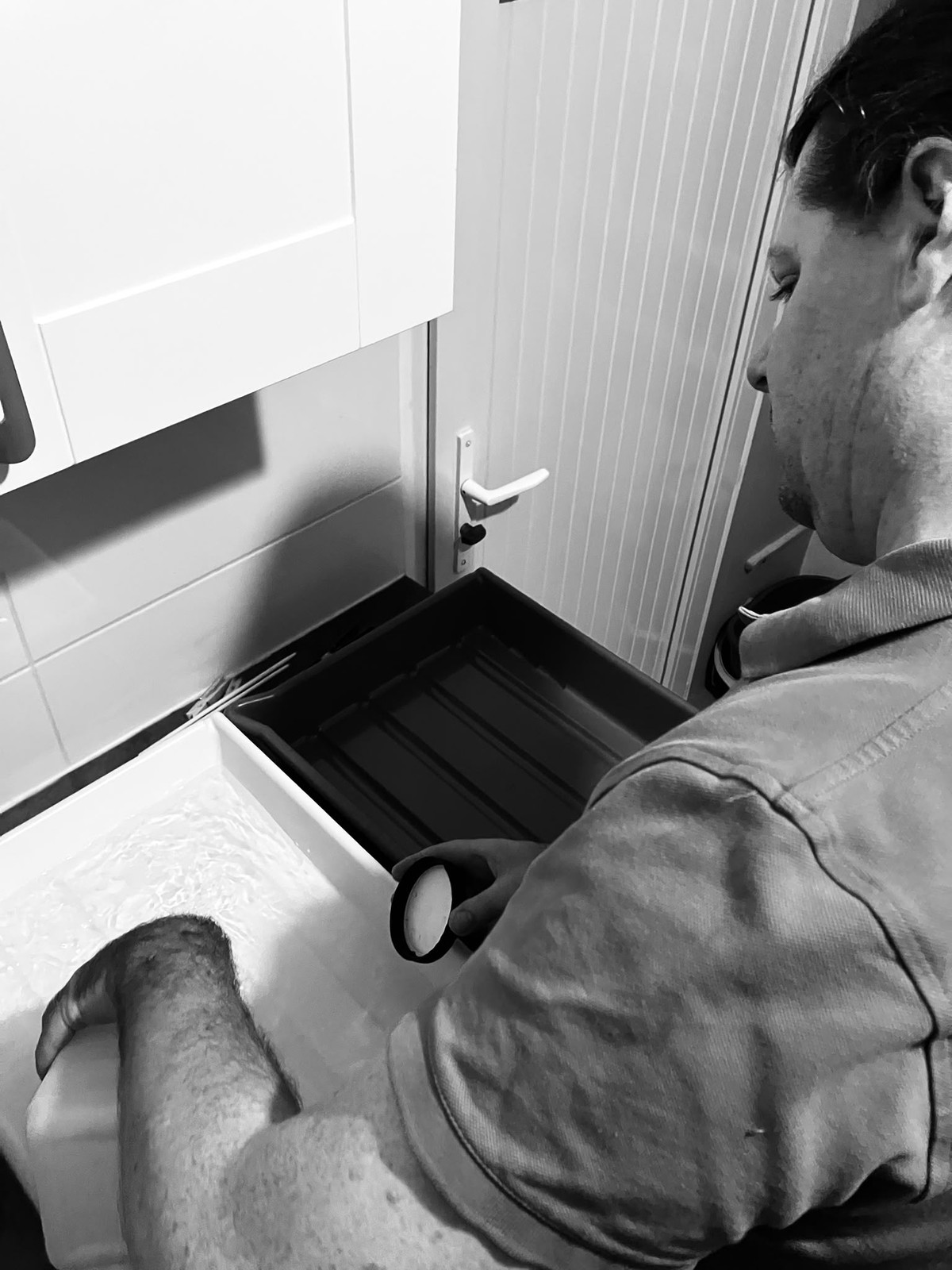
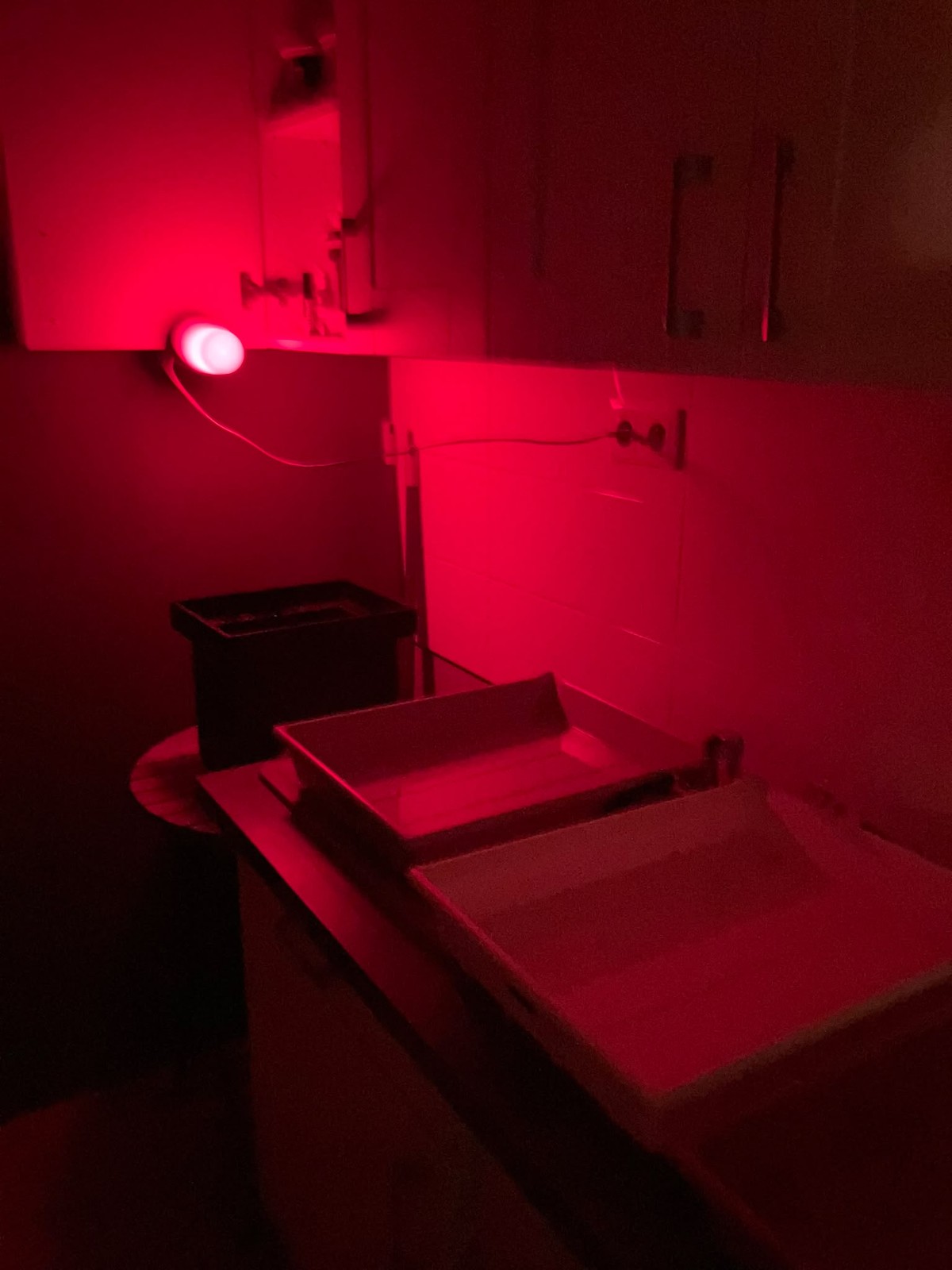
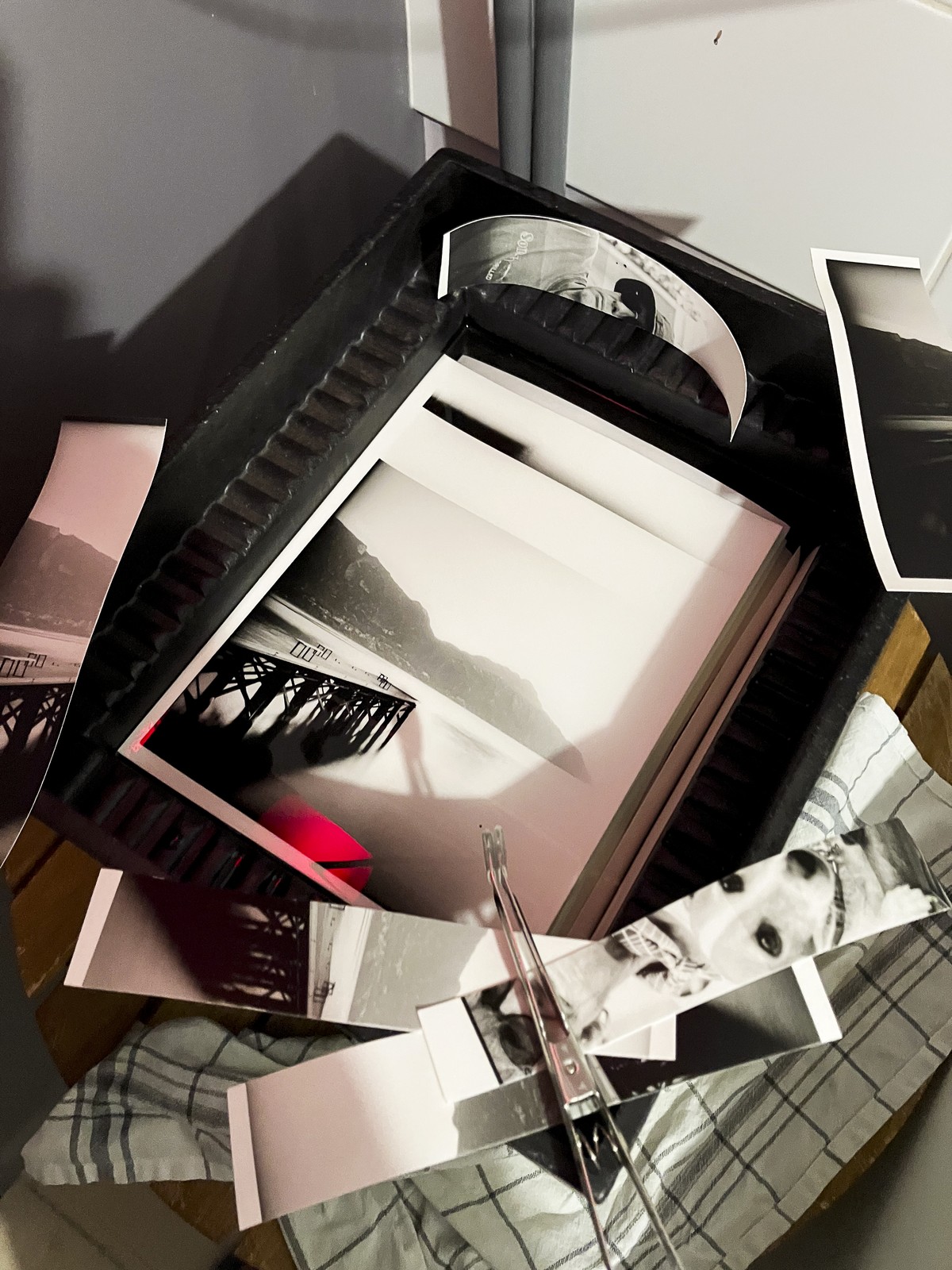
Then your eyes adjust to the half-light. A red light dimly lights the room. On the table, the trays are lined up. The tongs are ready. The photographic paper is kept safe from any stray light.
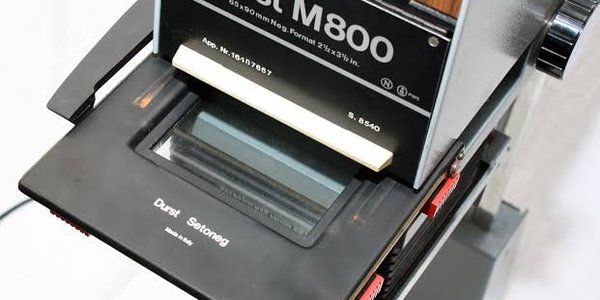
In the middle of it all, a Durst M800 recently set up by Pierre.
The scene feels strangely familiar and yet completely new.
It is the middle of the night. To work without any risk of stray light exposing the paper, we had to wait until daylight had completely gone. The evening started long before the first prints: preparing the equipment, chatting, having dinner, waiting. Outside, the light slowly faded and, without really noticing, the hours began to slip by.
For my friend, a fellow member of the Argia collective, this lab is nothing new. He started photography with film and already knows this world. He is the one who recently decided to set up a lab again, to rediscover the tools, gestures and habits of this practice.
For me, it's a first.
I have only been discovering film for a few months. After more than twenty years of photography, I felt like taking a different path. A Bronica SQ, a few rolls of 120 film and my first Kodak Tri-X 400 have been with me for these first steps.
I learned to load a film, to work with twelve frames, to accept not seeing my photos straight away, then to develop my first negatives.
But there was one step left.
Making the image appear.
We start by putting one of my negatives in the enlarger. I already know this photo, but when the Durst's light passes through the film and projects it onto the baseboard, I discover it differently. The image takes on another dimension. It is no longer just that small piece of film I've looked at several times; it becomes a projection we can frame, enlarge and interpret.
We focus, choose the framing and set a first exposure time. The paper goes under the enlarger, then the light is switched on for a few seconds.
It's amazing to think we had to wait for nightfall to do this.
A few seconds of light for an image that will then take several minutes to appear.
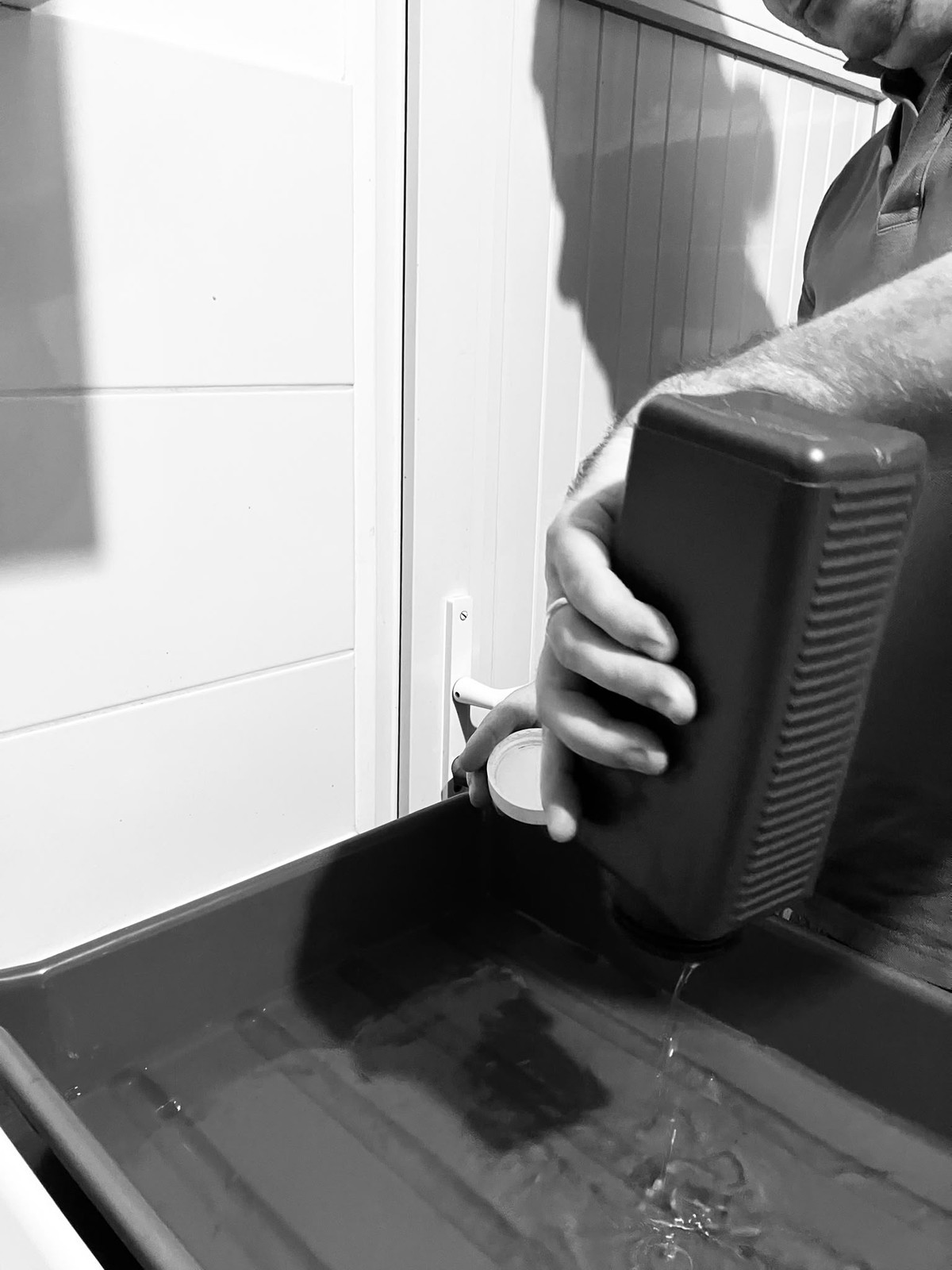
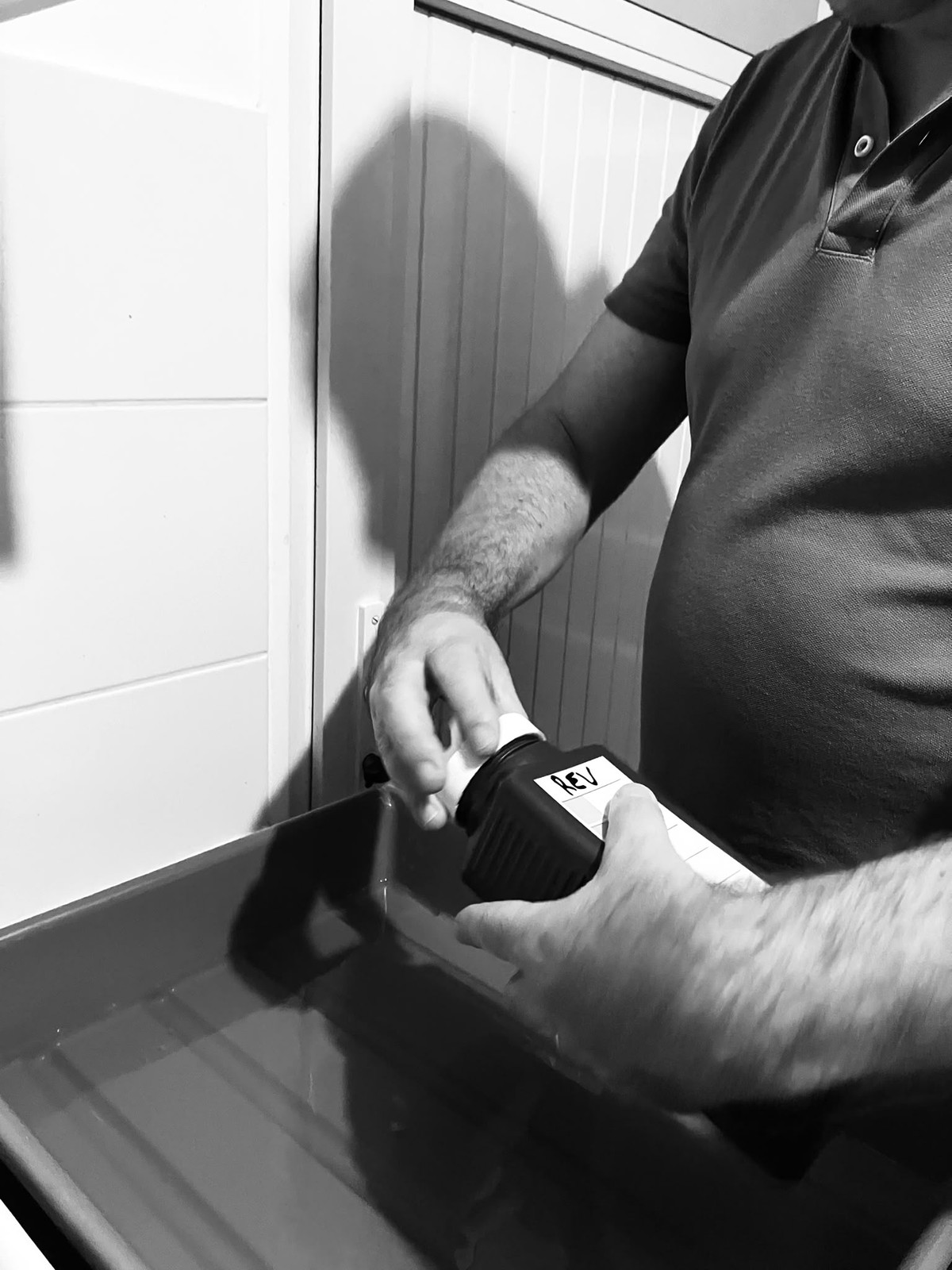
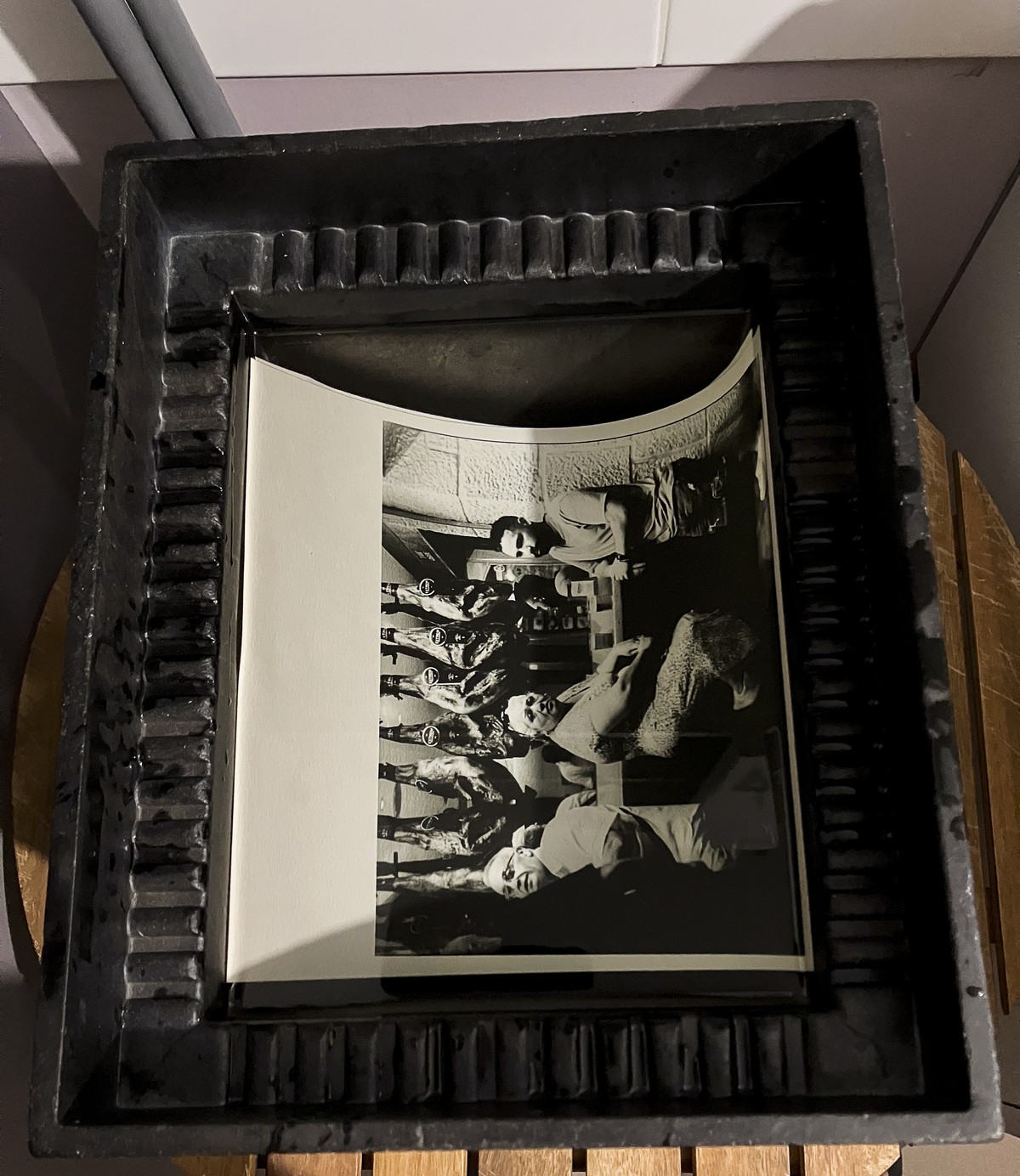
The paper goes into the developer. At first, almost nothing happens. Then, gradually, shapes begin to emerge. A dark area appears, then a highlight, an outline, a detail. The image slowly rises to the surface of the paper.
I watch this photograph appear and feel something quite hard to explain. I know the image, since I took it, but I had never seen it like this. With digital, the image exists the moment you press the shutter. Here, it seems to be truly born before my eyes.
The first print is, of course, only the beginning.
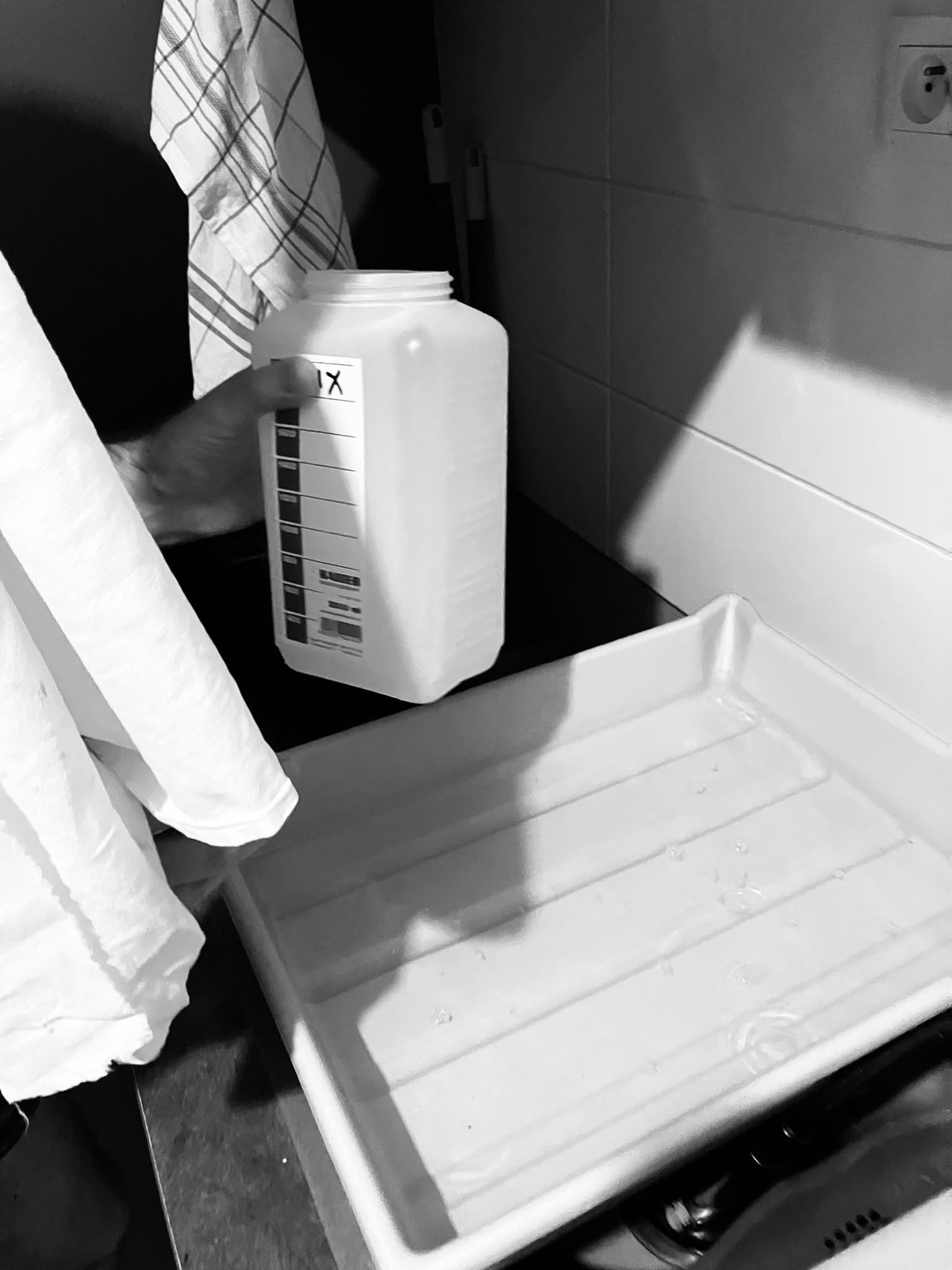
It has to go through the stop bath, the fixer, then the rinse. And when the paper finally comes out of the water, another surprise awaits me: the image still isn't really finished.
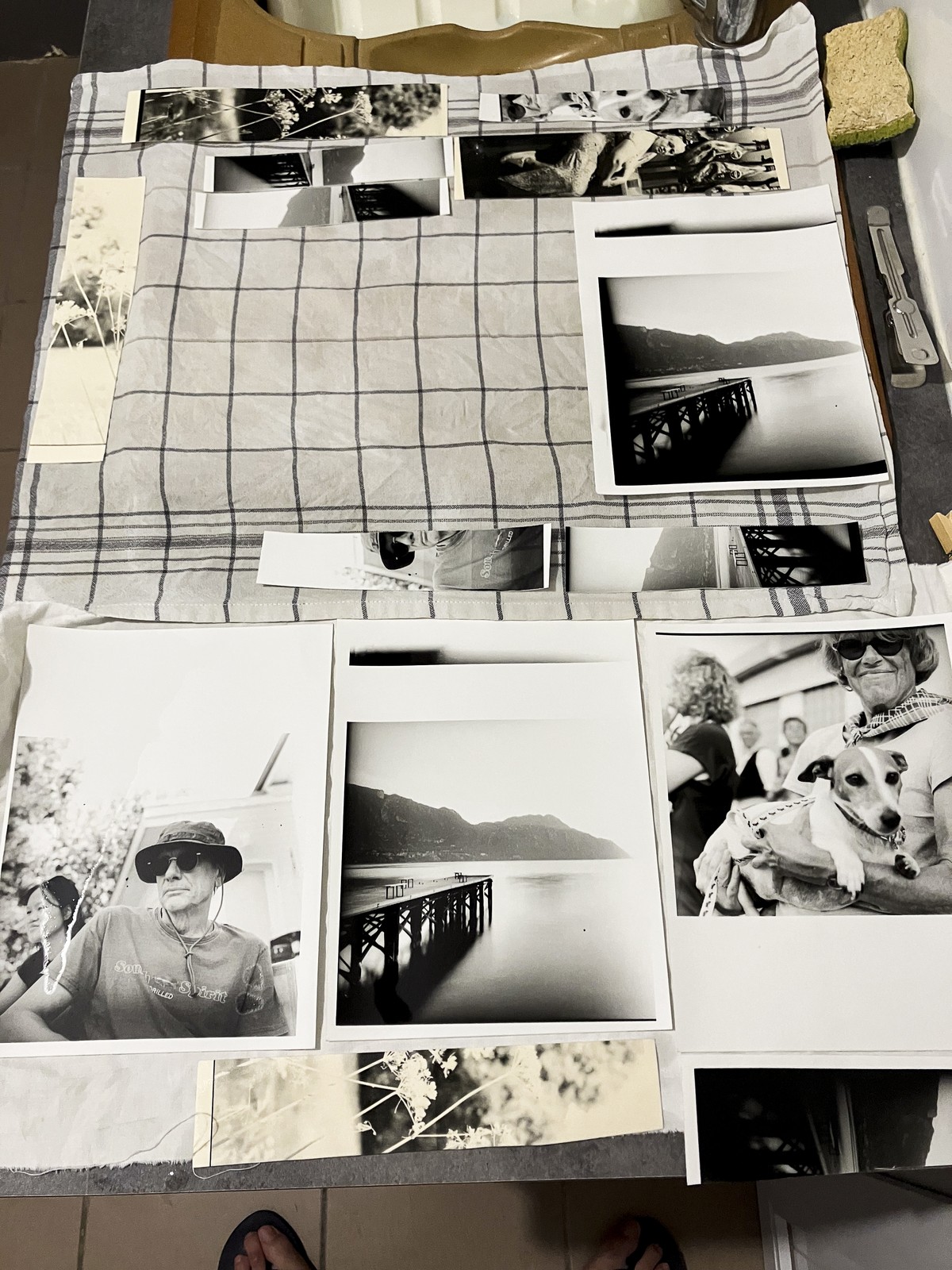
The paper is wet and its appearance will keep changing as it dries. Tones shift, contrasts look different and some nuances become clearer once the print is dry.
So we have to wait again.
That is probably what surprises me most. Even when the photograph seems finished, it keeps evolving. The paper dries, the nuances sharpen and the way we look at the image changes too.
We leave one print to dry while we prepare another. Then we come back to the first a few minutes later. We compare, observe, try to understand what works and what needs redoing.
So a film print is not just a way of reproducing a photograph. It is a new stage of creation.
The first results are, of course, not perfect. You have to adjust the exposure time, make test strips, change some settings and start again.
We look at the prints side by side. A difference of a few seconds can completely change an image's density. You look for the right balance between highlights and shadows, trying to find on paper what you imagined when you took the picture.
One print dries while another is being exposed. We go back to a photo, compare several attempts, talk about the result.
And without really noticing, the hours go by.
In the end, that is the feeling I will remember most from this first session.
We had to wait for nightfall to start and, a few hours later, we are still there, absorbed in our images. There is no real time any more. The outside light disappeared long ago and the lab has become a kind of interlude.
Everything seems to run at a different pace.
The exposure time, the time in the developer, the stop bath, the fixer, the wash, then the drying. Each step sets its own pace and it's impossible to really speed it up.
In our everyday practice, we often try to go faster. Here, it's exactly the opposite.
You have to wait.
And that waiting ends up becoming enjoyable.
It lets you stay with a photograph, really look at it, come back to it, compare it with another. You don't move straight on to the next image.
For a few hours, we simply made photographs.
Not by pressing a button.
By making them appear.
This session was also special because we were not discovering the lab in the same way.
For Pierre, it is a return to a practice he already knows. He started with film, and setting up this lab again lets him rediscover gestures and an approach he had already experienced.
For me, everything is new.
But in the end, this difference in experience is also what makes the moment interesting. There is passing on, advice, discussions around an image, but above all the pleasure of sharing a photographic practice. It fits our idea of the collective well, and it's probably also what I love about the moments we build with the Argia Collective: everyone arrives with their own experience, habits and eye, but photography becomes common ground.
As the evening goes on, a phrase by Ansel Adams keeps coming back to me: « You don't take a photograph, you make it. »
This phrase has been with me for a long time in my photography. I have always understood it as an invitation to build an image, not to see pressing the shutter as the end point of a photograph. Framing, light, choosing the moment, composition: all of this is already part of making an image.
But this weekend, in the lab, I think I understood the phrase differently.
With film, « make it » becomes almost literal.
Photography starts with pressing the shutter, but it doesn't stop there. There is the film, its development, the negative, then the enlargement. You have to choose the framing, the exposure time, the contrast. You have to watch the photo appear on the paper in the developer, take it through the different baths, wash it, then wait again for it to dry to really see the result.
At every step, something is at stake.
The photograph is no longer just taken. It is built.
And perhaps that is what struck me most in this first experience: after more than twenty years of photography, I felt I had found, in a very concrete way, an idea that has always been with me.
Making a photograph rather than just taking one.
Leaving the lab very late at night, I also thought of everyone who practised this kind of photography before us.
Of the great names in the history of photography, of course, whose images have spanned the decades and whose books have shaped the way we see.
But also of all the others.
Of those whose names appear in no textbook, who spent whole evenings in their darkroom, in a garage or in a small makeshift lab. Of those who learned by trying, who ruined prints, started again, waited for the paper to dry and started again once more.
From professional photographers to amateurs, in the noblest sense of the word: those who take photographs because they deeply love it.
I think I now understand a little better what drew them to this world.
There is something deeply magical about seeing an image appear on a white sheet.
We know it intellectually. We have all seen old photographs, films and documentaries showing a film lab. But until you have lived it, you don't really grasp what it means.
In the red light, facing a sheet of paper in the developer, the image slowly appears.
And for a few seconds, you truly witness its birth.
There is something timeless about this gesture.
The tools have changed, the cameras have changed, the media have changed. But this feeling seems to have passed down through the generations.
For a few hours, I understood a little better how those who came before me saw things. From the most famous to the most anonymous, they all knew that moment when an image slowly appears on paper. I am now part of this community that can describe that feeling.
A simple magic.
Patient.
And deeply photographic.
Exhibitions, events, calls for projects and blog articles: get the key news from the Argia Collective straight to your inbox.
You work at night or in a room with no stray light, under a red safelight. The enlarger projects the negative onto photographic paper, then the paper goes through the developer, the stop bath, the fixer and the rinse. You work with test strips before getting a good print.
Photographic paper is sensitive to light: to stop stray light from exposing it, you need complete darkness, apart from the lab's safelight (red or orange).
No: the paper is wet and its appearance keeps changing as it dries. Tones and contrasts shift, which is why it's worth waiting before judging the result.
You need strict precautions for handling chemicals (protect yourself, ventilate the room well), follow the technical process and manage the light carefully. Chemicals must be stored safely and disposed of by taking them to a recycling centre. For printing, keep a close eye on temperature, bath times and the cleanliness of the workspace.
Grain, chemistry, light: dive deeper into film photography.
Cookies
We and selected third parties use cookies or similar technologies for technical purposes and, with your consent, for experience, measurement and marketing.