Collectif Argia
Paris, the 1950s. An ordinary street, a weekday morning. A man walks along with a baguette under his arm, unaware that a photographer is patiently watching him from the pavement opposite. The photographer has been there for a while. Waiting. Looking. He is not after an event, dramatic light or a heroic gesture. Just an everyday gesture.
And yet something in this photo says: this man exists. His life is worth looking at.
That is humanist photography. Before any definition, a conviction: ordinary people deserve to be at the centre of the image. It focuses on people in their daily lives, with a gaze full of empathy, dignity and optimism.
It is often presented as a French movement born in the 1930s that matured after the Second World War. The definition is accurate, but it only tells part of the story. What unites these photographers is not first and foremost a style, an era or a place: it is an intention. To place people at the centre of the image, in their surroundings, to look closely at everyday life, to recognise the dignity of every existence. This common thread runs through the whole series. We will start with the French movement, the one history named « humanist photography », before discovering that the same way of seeing crossed borders and continents, taking on other forms, other names and other stories elsewhere. A deliberately concise approach, not an exhaustive one: this article is the way in, the following ones will go into detail.
First point, which often surprises people: the photographers we call « humanists » never described themselves that way. Unlike other art movements such as surrealism, there was no manifesto, no programme, no formal group. It was art history that later named this period: that of a number of French photographers whose shared affinities drew them to ordinary people, the street, everyday life. They knew each other, exhibited together and sometimes worked side by side, notably at the Rapho agency.
The setting is this: a French movement born in the 1930s, which had its golden age after the war and came to an end in the 1960s. A movement that is now part of photographic heritage.
But what really remains of it? That is the question running through this series, which its final article will try to answer.
Humanist photography is often associated with black and white, the streets of Paris, faces worn by work or glowing with simple joy. That's not wrong, but it is reductive. Because what defines this movement is not an aesthetic. It is a way of seeing.
The gaze of the photographer who loves people.
Its favourite subjects: the street, work, celebrations, childhood, old age, everyday gestures. A stolen kiss, a game of pétanque, a child running across a school playground. Fleeting moments, caught on the fly, « à la sauvette », to borrow the title of Henri Cartier-Bresson's book.
This intention translates into four concrete attitudes (presented in short boxes).
Building a relationship with your subject, however brief or silent. Empathy is a shared trait of these photographers. They seek to recognise the other as a person, to take an interest in their life, and to photograph them with respect rather than as an object or a symbol.
The humanists photographed lightness and life resuming after the war, but also poverty, the underworld and the night. They simply didn't denounce: no miserabilism, no militant message. A person's dignity, never their vulnerability, as the angle.
© Donation Willy Ronis, Ministère de la Culture (France), Médiathèque du patrimoine et de la photographie, distributed by GrandPalaisRmn Photo
The decisive moment is not improvised, in the sense of a photographer turning up by chance and pressing the shutter. On the contrary, it is awaited and anticipated: it is a quest. What cannot be planned is the exact moment when everything lines up. It's not about understanding before you shoot, but about being there, open, ready to catch what happens. This openness to reality doesn't rule out all staging, though: Robert Doisneau sometimes used it when it let him express a human truth rather than document a fact. Le Baiser de l'Hôtel de Ville, made with two young actors, is the most famous example.
Cartier-Bresson would wait for hours for the right people to walk into his frame. He would return to the same place several times to find the same light. Patience is not a constraint: it is the condition for seeing truly.
Finally, three confusions should be avoided. Humanist photography differs from social photography in its intention and purpose: where the latter seeks to denounce an injustice, document a reality or feed a public debate, the former can show poverty, work or life's hardships without reducing them to a demonstration. It also differs from photojournalism: it doesn't report on an event, it bears witness to moments of life. Finally, it shares with street photography a taste for the street and the unexpected, but their approaches are not the same: contemporary street photography often pursues a more formal or personal search, while humanist photography puts the encounter with the other, and their dignity, at the heart of its gaze. We will come back to these distinctions in the following articles.
The forerunners, the golden age, the heirs, and today.
The French period opens the series. It all began in the 1930s, with forerunners who went out into the street to photograph working-class people and small trades. Among them, André Kertész brought a fresh eye to Paris, and Brassaï was a pivotal figure: his Parisian nights, cafés and underworld still belonged to social photography, but atmosphere already mattered as much as people. More aesthetic, and less consensual. Then came the golden age, 1945-1960: emerging from two wars, photography refocused on people as a value, and the boom in illustrated magazines created strong demand for reportage. The movement gradually faded at the turn of the 1960s.
© Donation André Kertész, Ministère de la Culture (France), Médiathèque du patrimoine et de la photographie, distributed by GrandPalaisRmn Photo
In the United States, slightly earlier, a forerunner movement developed: social documentary photography. Around 1905, Lewis Hine was one of its pioneers, with his denunciation of child labour. Then, during the Great Depression, came the photographers of the Farm Security Administration: Dorothea Lange, Walker Evans, Arthur Rothstein, Gordon Parks. It is worth noting who paid them: the US federal government commissioned these images to document poverty and justify its reforms. Where the French showed without denouncing, the Americans documented to promote reform. Two parallel approaches, two very different intentions.
© Lewis Hine, A little spinner in the Mollahan Mills, Newberry, S.C., 1908. Public domain (source: Library of Congress, National Child Labor Committee Collection)
Reconstruction created the same need to bear witness everywhere, over the same period as in France, from the end of the war to the late 1960s. But each country responded in its own way, and none called it « humanism ». In Switzerland, Werner Bischof spent six months crossing devastated Europe from the winter of 1945: his portrait of a boy from Roermond, who had lost an eye to a wartime booby trap, made the cover of the magazine Du in May 1946, under the title « Help the children of Europe ». In Italy, a movement no one there wanted to name, which photographers called « lyrical realism », turned towards the South and the humble. In Britain, the illustrated press didn't console: it accused and demanded reform. In the Netherlands, photography was just emerging from clandestinity, with the association that would shape the post-war years born in 1945 from a group of resistance members who had photographed the Hunger Winter even though the occupiers had banned it. And in Spain under Franco, simply photographing people honestly was already a political act. Many ways of seeing related to the French movement. Never quite the same.
© Netherlands, the Hunger Winter (Hongerwinter), 1944. No known restrictions (source: Nationaal Archief / Spaarnestad Photo)
Between the golden age and us, a transitional generation kept the flame alive. First Sabine Weiss, a major figure of the movement whose work spans much of the golden age. Then Jean Dieuzaide, Marc Paygnard (patron of the Argia Collective), Édouard Boubat. They carried the gaze forward when the movement itself had already faded. This legacy is not only French: in the United States in 1958, Robert Frank published The Americans, a great foreign photographer's view of an entire country, which in turn shifted the way people are photographed.
Today, humanist photography is part of photographic heritage. The world that gave birth to it has gone, practices have changed profoundly, and images no longer circulate in the same way. Yet its influence endures. More than a style associated with the streets of post-war Paris, humanist photography permanently changed the way we look at reality: it asserted that ordinary life, simple gestures and anonymous lives could become major subjects. Some of its values still run through contemporary photography: attention to others, the search for an encounter, the wish to photograph with respect and dignity. They don't necessarily take the same forms or follow the same paths, but they are still present in authors who place people at the heart of their work. Which photographers carry this legacy today, in what forms and with what intentions: that is the subject of the last article in this series.
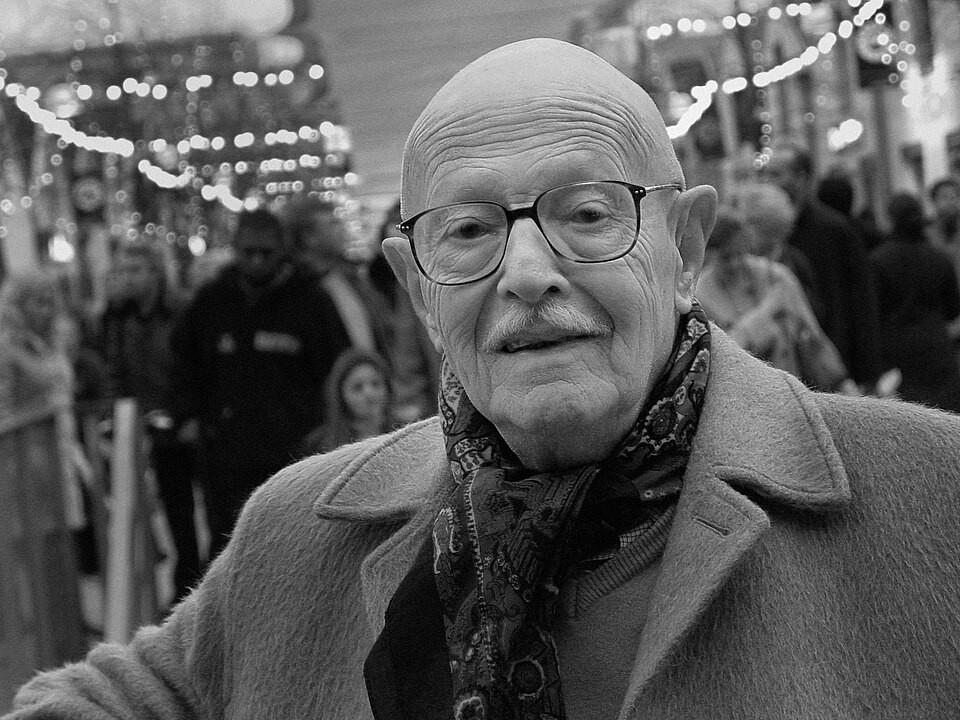
© Arnaud Elissalde
© Pierre Le Forestier
Why would a collective based in Hendaye devote a whole series to humanist photography?
Not out of nostalgia. Not to recreate a 1950s aesthetic on the banks of the Bidasoa. And not to present ourselves as heirs to a movement that now belongs to the history of photography.
Because, deep down, what interests us in humanist photography is not just an era, a place or a style. It is an intention: a way of looking at others, of considering every life worthy of attention, of seeking an encounter rather than mere observation. An intention born in a particular context, in post-war France, which has since crossed borders and continues to inspire photographers with very different practices.
This is the spirit of the Argia collective's approach. What we share with the humanist photographers is not a model to copy, but values that remain deeply relevant: respect for the people photographed, and the wish to place people at the centre of the image without ever cutting them off from their surroundings, their place and their history.
This attention to people echoes Argia's very foundations: creating spaces for encounters around photography, encouraging the passing on of a way of seeing, sharing images with those who inhabit the same world. Rooted in Hendaye and the Basque Country, the collective is growing in a particular place, but with the wish to stay open to perspectives from elsewhere.
The Three Crowns Festival follows the same approach. It isn't meant to celebrate a movement frozen in the past, but to create a dialogue between the photographs that built this history and contemporary authors who still question the world and put people at the heart of their work. A meeting place between generations, places and different ways of seeing.
Humanist photography is a movement that puts ordinary people at the centre of the image, with empathy, dignity and optimism. It is not first and foremost a style, but an intention: to look at everyday life and recognise the dignity of every existence.
It is a French movement born in the 1930s, which had its golden age between 1945 and 1960, after the Second World War, before fading at the turn of the 1960s.
Major figures include Robert Doisneau, Willy Ronis, Henri Cartier-Bresson, Brassaï, André Kertész, Sabine Weiss, Édouard Boubat and Jean Dieuzaide. Many were linked to the Rapho agency.
Social photography seeks to denounce an injustice or document a reality to feed a debate. Humanist photography can show poverty or work, but without reducing them to a demonstration: it bears witness to moments of life, with respect.
Exhibitions, events, calls for projects and blog articles: get the key news from the Argia Collective straight to your inbox.
The photographic gaze, from yesterday to the 2027 anniversary year.
Cookies
We and selected third parties use cookies or similar technologies for technical purposes and, with your consent, for experience, measurement and marketing.